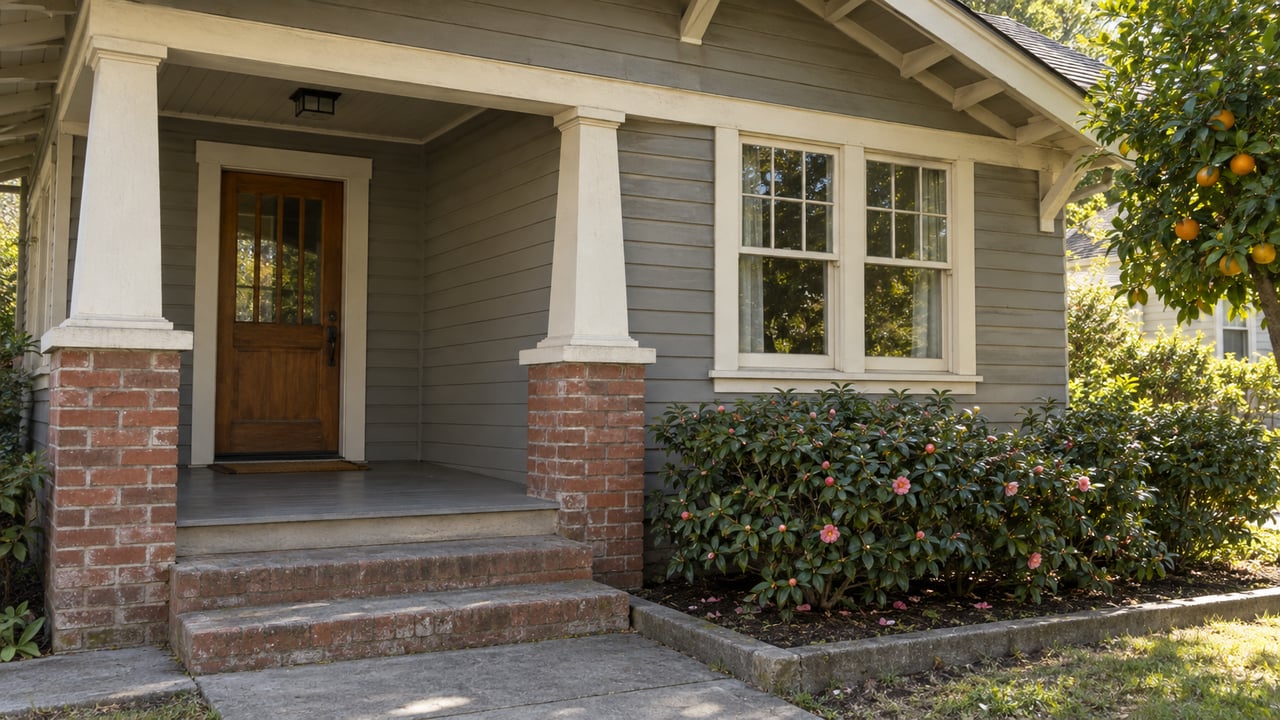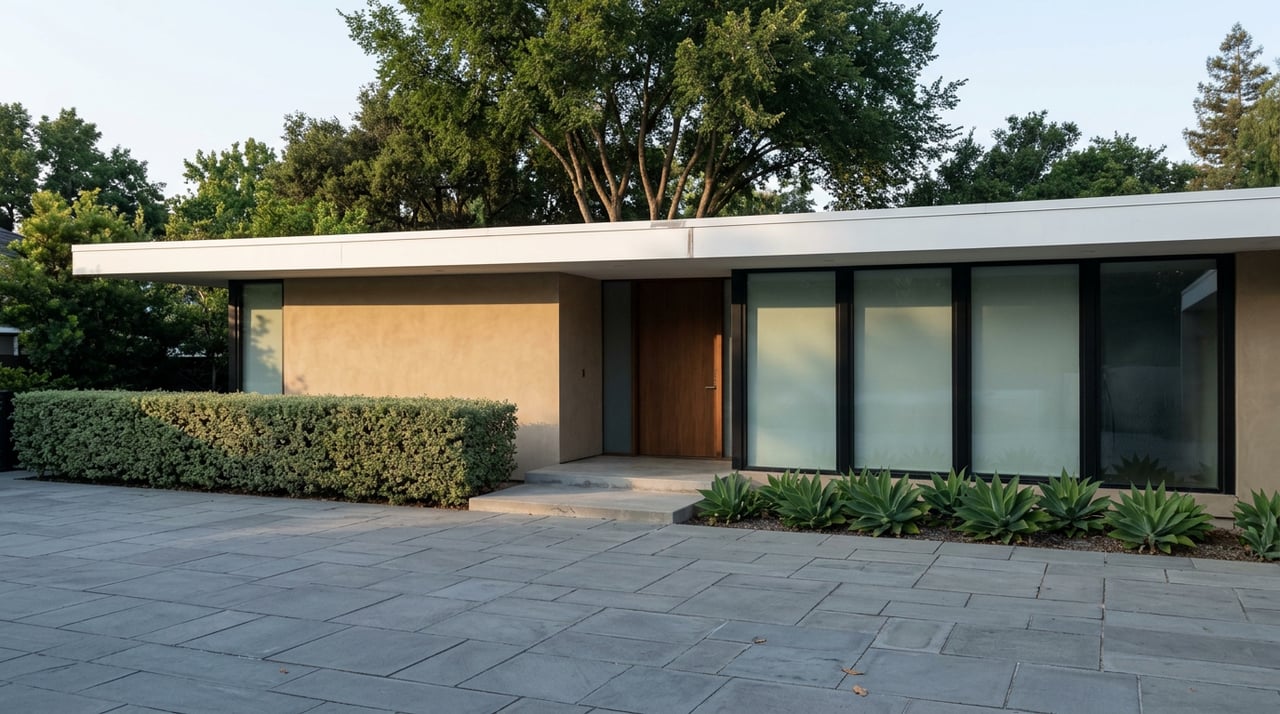
Walk down Broadway in the Anaheim Colony on any given Saturday and you'll pass a run of bungalows and Foursquares from the 1910s and 1920s, several of them wearing a small bronze plaque near the front door. The plaque means the same thing on every house: a Mills Act contract with the city. What it does not tell you, standing on the sidewalk, is how much that contract is actually worth to whoever owns the house, or what the next owner is agreeing to take on.
That gap between what the plaque signals and what it actually costs or saves is the thing worth understanding before you write an offer in this neighborhood. Two homes on the same block, built the same decade, listed at the same price, can carry very different tax bills and very different obligations depending on whether that plaque exists and what shape the contract behind it is in.
What That Plaque Actually Means
The Mills Act is a California law from 1972 that lets cities strike agreements with owners of qualified historic homes: in exchange for maintaining and restoring the property's historic character, the county assessor taxes it using a different formula than the standard market-value approach. Anaheim's city council adopted its own Mills Act program in 2000, and it applies within the city's historic districts, primarily the Colony, along with smaller pockets known as Hoskins, Five Points, and Historic Palm. Anaheim's own historic-structure inventory describes the Colony itself as a 1.8-square-mile area bounded by North, South, East, and West Streets, containing more than 1,100 qualified structures.
Not every old house in that footprint has a contract. The city keeps a public list of every address currently enrolled, organized by street and district code, and it shows exactly what you'd expect from a decades-old voluntary program: some contracts date back to the early 2000s, others were recorded as recently as 2023, and homes built within a few doors of each other often entered the program in entirely different years. Two houses on West Broadway illustrate this well. One was built in 1916 and didn't enter the Mills Act program until 2014. Another nearby, built in 1923, has carried a contract since 2003. Same street, same era of construction, more than a decade apart in when the tax benefit actually started.
The city's own materials describe the incentive in plain terms: a reduction in the annual property tax bill, with current participants reporting savings as high as 70 percent.
The Same Block, Two Different Tax Bills
Here's where the plaque stops being a charming detail and starts being a financial variable. Picture two homes in the Colony, both listed near the district's recent median sale price. One has never applied for Mills Act status. The other has carried a contract for years. Nothing about the exterior tells you which is which.
| Standard-assessed home | Mills Act home | |
|---|---|---|
| Tax basis | Assessed at market value under standard Proposition 13 rules | Assessed using the state's income-based Mills Act formula |
| Reported tax savings | None beyond standard homeowner exemptions | Up to 70 percent off the annual bill, per current program participants |
| What transfers at sale | Nothing beyond the home itself | A 10-year contract that renews automatically each year |
| Ongoing obligation | Standard maintenance | Annual exterior inspection by the city, county, or state |
| Risk if neglected | None specific to the program | Contract cancellation can trigger a penalty of 12.5 percent of the home's fair market value |
Nothing in that table is a guess. It's the same program, described the same way regardless of which house you're standing in front of. The point is that a listing price alone doesn't tell you which column you're buying into, and the difference between the two columns is large enough to change what a home actually costs to hold year over year.
What Transfers When You Buy the House, Not Just the Plaque
A Mills Act contract runs with the property, not the person. When a home with an active contract changes hands, the new owner steps into the same 10-year agreement, the same maintenance standards, and the same annual inspection schedule the seller was living under. Anaheim's preservation staff are explicit that sellers are expected to disclose the contract's requirements to buyers, along with any items still outstanding on the property's 10-year maintenance plan.
That disclosure matters because the contract isn't decorative. Every enrolled property is subject to a yearly inspection covering everything visible from the public right of way, and owners are notified whether they're in compliance or not. If a property falls out of compliance and stays that way despite the city's attempts to work it out, the state allows Anaheim to cancel the contract and fine the owner 12.5 percent of the home's fair market value. For a Colony home priced anywhere near the district's current range, that's not a rounding error.
None of this means a Mills Act home is a bad buy. It usually means the opposite: the tax savings pass on to whoever owns the house next, which is exactly why some listings in the Colony now advertise "possibility for huge tax savings under the Mills Act" as a selling point rather than a footnote. The catch is that the obligations pass through just as automatically as the savings do, and a buyer who doesn't ask about either one is agreeing to both without knowing it.
The Price Might Already Know Something You Don't
Here's the part that catches people off guard on the buying side. If a home's Mills Act savings are real and ongoing, a seller and their agent have every reason to price that benefit into the listing rather than leave it on the table. A house that looks expensive for its square footage might be expensive precisely because the tax bill that comes with it is unusually low. A house that looks like a bargain might be a bargain because it was never enrolled, or because its contract lapsed years ago and nobody renewed it.
Recent market data on the Colony reinforces why this is worth checking rather than assuming. Over the three months ending May 2026, the median sale price in the district ran about $792,000, down 6.3 percent from the same period a year earlier, while list prices tracked separately in both June and August 2026 clustered closer to $899,000, a gap that reflects list-versus-sold pricing rather than a contradiction. Time on market has moved around in the same stretch, from a median of 31 days over the three months ending May 2026 to 41 days as of August 2026, and the district has carried a competitiveness score of 78 out of 100 as of June 2026, with multiple offers common on well-presented listings. In a market that active, there usually isn't time to sort out a home's actual tax status after you've already fallen for the porch.
Before You Write the Offer
A few questions are worth settling before you get emotionally attached to a particular bungalow:
- Ask your agent to check the address against Anaheim's public Mills Act property list, which is organized by street name and shows the year each contract was recorded.
- If the home is enrolled, request a copy of the recorded contract and the current 10-Year Maintenance Plan, not just a verbal assurance that "the taxes are low."
- Ask when the last annual inspection happened and whether the property was found in compliance.
- If the home is not enrolled but sits within one of the historic districts, ask whether it would qualify for a new Mills Act application, since that's a separate and sometimes overlooked opportunity for a buyer planning to stay long term.
- Confirm how the current tax bill compares to what a standard, non-Mills Act assessment would look like at your purchase price, so you know exactly what you're comparing the home's price against.
A Few Questions Worth Asking Your Agent
Does the Mills Act only apply in the Colony? No. Anaheim's program also covers smaller historic pockets known as Hoskins, Five Points, and Historic Palm, along with a citywide category for individually designated historic structures outside those boundaries.
Can a contract be canceled by the owner if they no longer want it? Yes, but not cleanly. An owner can request cancellation at any time, but the property remains under contract, and its obligations, for the remainder of the original 10-year term, with tax savings phasing out gradually rather than ending immediately.
What happens if a seller doesn't disclose an active contract? The obligation to disclose is part of the city's own program guidance, and a buyer who discovers an undisclosed contract after closing can find themselves responsible for maintenance requirements and inspection compliance they never agreed to walk into. This is exactly the kind of detail worth confirming through title work and direct records requests before closing, not after.
A house in the Colony is never just a house. It's a specific relationship with the city, sometimes a very favorable one, sometimes none at all, and the only way to know which you're buying is to ask before you sign rather than after you move in.
If you're weighing a historic bungalow against a newer build elsewhere in Anaheim or a neighboring city, the Jin Hong Team can help you pull the actual Mills Act status, run the real cost comparison, and figure out what a specific address is asking you to take on. Reach out for a free home valuation and a straight answer before you write the offer.